


In this post:
- The Importance of Teaching the Consonant Digraph CH
- Understanding Initial and Final Consonant Digraph CH
- Fun Activities to Teach Initial Consonant Digraph CH
- Engaging Exercises for Final Consonant Digraph CH
- Creative Ways to Use Consonant Digraph CH Words in Lessons
- Interactive Games to Reinforce Consonant Digraph CH
- Storytelling and Reading Exercises Involving Consonant Digraph CH Words
- Printable Worksheets and Resources for Teaching Consonant Digraph CH
What Exactly is a Consonant Digraph?
Simply put, it’s a pair of consonants that combine to form a single sound. The digraph CH can produce sounds like in “chocolate,” “school,” and, occasionally, “chef.” Understanding these sounds is crucial for young learners as they embark on their reading journey.
The Importance of Teaching the Consonant Digraph CH
Teaching the consonant digraph CH is a vital step in building a strong phonetic foundation. For young readers, recognising these sounds helps in decoding words and enhances their reading fluency. When children can quickly identify and pronounce CH words, they gain confidence, which is crucial for their reading journey.
Moreover, understanding CH helps learners distinguish similar sounds, such as those produced by other digraphs, such as SH or TH. This differentiation is key in developing precise reading skills. When our learners can distinguish between these sounds, they are better equipped to tackle a broader range of vocabulary.
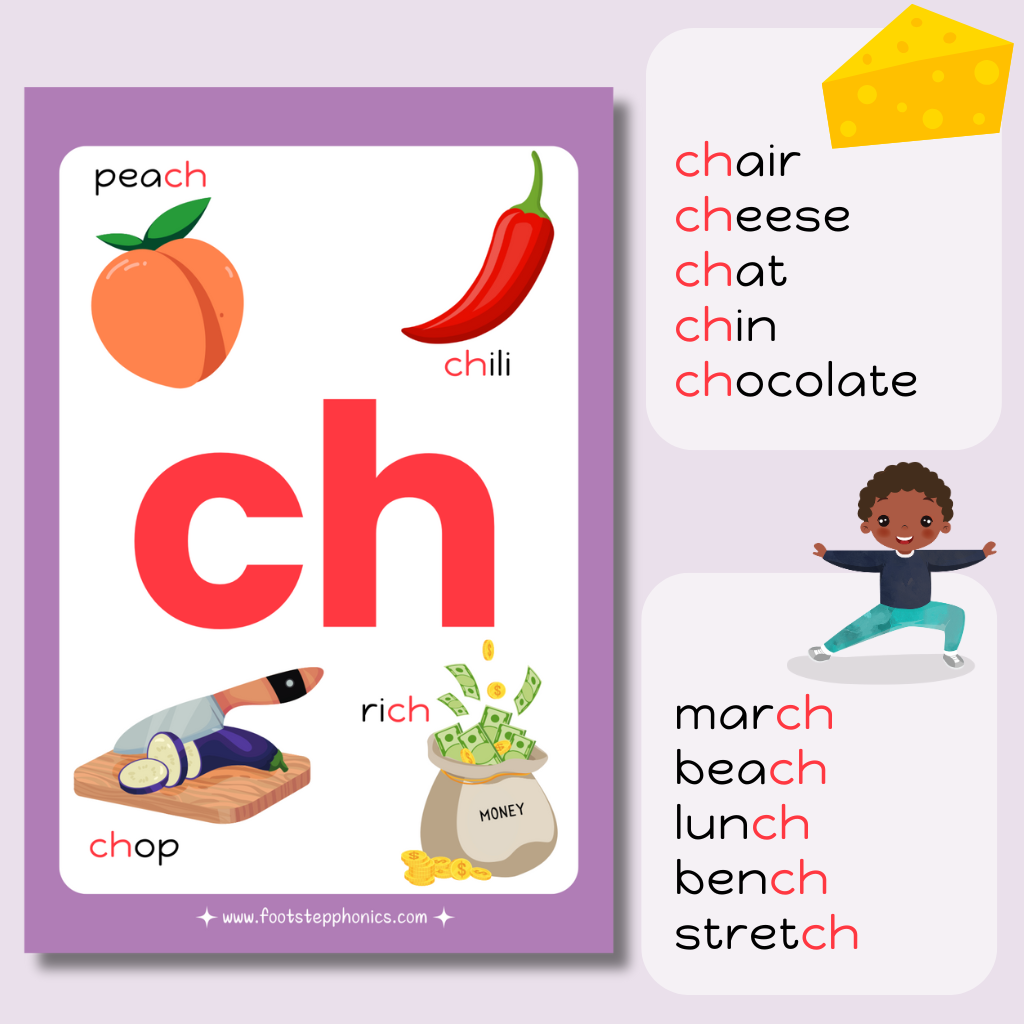
Incorporating the consonant digraph CH into lessons also promotes a love for learning. By using engaging methods, we can make phonics feel less like a chore and more like an adventure. As we contribute to their literacy skills, we also foster a lifelong enthusiasm for reading.
Understanding Initial and Final Consonant Digraph CH
The consonant digraph CH can appear in various positions within words: at the beginning (initial) or the end (final). For instance, words like “chase” and “chicken” feature the initial CH, while “lunch” and “beach” highlight the final CH. Understanding these positions helps children grasp how sounds form within words.
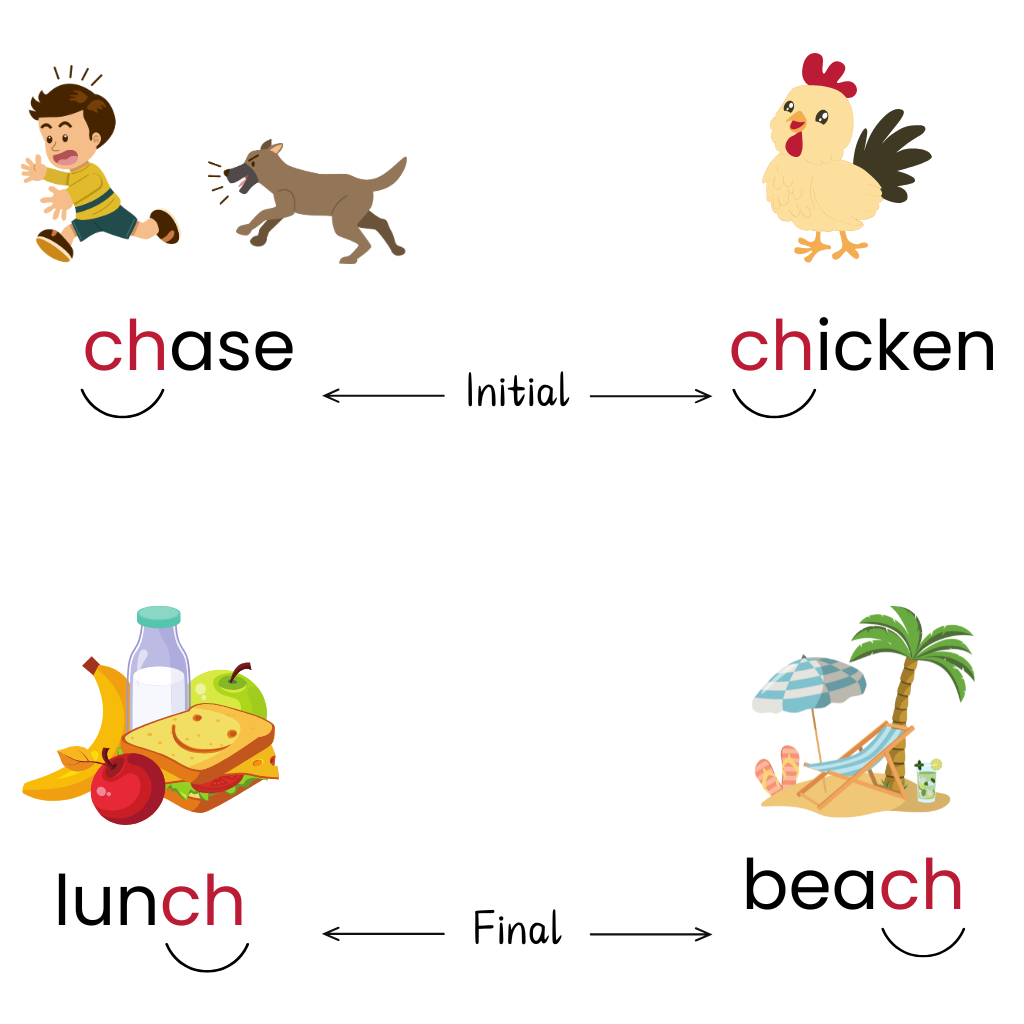
Introducing these concepts can be as simple as creating lists of common words. Encourage learners to notice patterns and sounds. For instance, when they see “chicken” and “chase,” they can identify the initial digraph and predict the sound before even pronouncing the word.
Exploring initial and final CH in various contexts helps solidify this knowledge. By reading stories or playing word games, we can reinforce the recognition of the consonant digraph CH in different positions. This not only strengthens their phonetic skills but also enhances their vocabulary.
Fun Activities to Teach Initial Consonant Digraph CH
Chanting with CH
Create a rhythmic chant using CH words like “chase,” “cheese,” and “chop.” Encourage learners to join in and repeat after you. This activity helps them remember the sound through repetition and rhythm.
CH Scavenger Sound Hunt
Organise a scavenger hunt where children look for items that start with the CH sound. This can be done in the classroom or at home, turning learning into an interactive treasure hunt.
Crafty CH Creations
Use arts and crafts to reinforce the sound. Have learners create a collage of CH words using magazine cutouts or drawings. This visual and hands-on activity makes learning memorable and engaging.

Implementing these activities not only makes learning enjoyable but also provides a multisensory approach that caters to different learning styles.
As children participate, they naturally absorb the initial consonant digraph CH, thereby boosting their phonetic skills.
Engaging Exercises for Final Consonant Digraph CH
Picture Match
Create a set of cards with pictures and corresponding CH words, such as “beach,” “lunch,” and “peach.” Have learners match the pictures to the correct words to reinforce the final CH sound.
Rhyme Time
Encourage learners to come up with words that rhyme with a given CH word, such as “lunch.” This activity not only reinforces the digraph but also enhances their rhyming and phonetic skills.
CH Sentence Building
Challenge children to create sentences using words that end with CH. For instance, “The cat ate lunch on the beach.” This exercise promotes creativity while reinforcing the final consonant digraph CH.

These exercises provide a comprehensive approach to learning, combining visual, auditory, and kinesthetic elements.
By integrating fun, interactive activities, we ensure that children enjoy the learning process and gain a solid understanding of the final CH.
Creative Ways to Use Consonant Digraph CH Words in Lessons
Word Walls and Lists
Creating a CH word wall in your classroom can be an excellent visual tool. Display words like “chalk,” “cherry,” and “branch” for learners to see daily. This constant exposure helps reinforce their understanding and recall of the consonant digraph CH.
Story Creation
Encourage learners to write short stories using a list of CH words. This activity not only helps them practice their writing skills but also encourages them to think creatively and integrate their phonics knowledge.
Role-Playing
Incorporate CH words into role-playing activities. For example, set up a pretend grocery store where children can “purchase” items like “chips,” “chocolate,” and “chicken.” This hands-on approach makes learning dynamic and relatable.
By embedding these creative methods into your lessons, you can make learning the consonant digraph CH an enjoyable and enriching experience. These strategies allow children to see the practical application of their phonics skills in everyday life.
Interactive Games to Reinforce Consonant Digraph CH
CH Bingo
Create bingo cards with CH words and pictures. Call out words and have learners cover the corresponding picture on their card. This game combines listening and matching skills, making it a fun way to reinforce the digraph.
Word Sort
Provide a mix of words, some with and some without the CH digraph. Have learners sort them into two categories. This activity sharpens their ability to recognise the digraph and its presence in words.
Digital CH Games
Leverage technology by using educational apps or online games focused on the consonant digraph CH. Interactive digital games provide immediate feedback and keep learners engaged.

These games transform learning into play, ensuring that children remain motivated and excited about phonics. Incorporating games into your teaching strategy can significantly enhance retention and understanding of the consonant digraph CH.
Storytelling and Reading Exercises Involving Consonant Digraph CH Words
Storytime Adventures
Choose stories rich with CH words and read them aloud. Encourage children to listen for and identify the digraph as you read. This exercise helps them recognise the sound in context and improves their listening skills.
Create-a-Story
Have learners create their own stories using a list of CH words. Provide them with a simple template, or let their imaginations run wild. Sharing their stories with peers can also boost their confidence and communication skills.
CH Word Highlights
During reading sessions, ask learners to highlight or underline CH words. This activity promotes active reading and helps them focus on the digraph within the flow of a story.
These storytelling and reading exercises not only reinforce the consonant digraph CH but also cultivate a love for reading. By integrating these activities into your lessons, you nurture both phonetic skills and creativity.
Printable Worksheets and Resources for Teaching Consonant Digraph CH
Printable worksheets can be an invaluable tool in teaching the consonant digraph CH. Worksheets can include activities such as fill-in-the-blank, matching, and word searches, all focused on CH words. These resources provide structured practice that reinforces what learners have experienced through interactive activities.

Incorporating these worksheets and resources into your teaching strategy can enhance your lessons, providing a balance between interactive and traditional learning methods. As learners complete these activities, they solidify their understanding of the consonant digraph CH, building a strong foundation for future reading success.
Tips for Assessing Progress in Learning Consonant Digraph CH
Assessing learners’ progress is crucial in ensuring they are on the right track with their phonics education. Here are some effective ways to measure their understanding of the consonant digraph CH:
Regular Quizzes
Conduct short quizzes covering CH words in both initial and final positions. These quizzes can help gauge how well learners recognise and pronounce the digraph.
Observation
Pay attention to how learners apply their knowledge during reading and writing activities. Observing their ability to identify and use CH words in context provides insight into their comprehension.
Peer Assessment
Encourage learners to work in pairs and assess each other’s use of CH words. This approach promotes collaboration and allows them to learn from one another.
By using these assessment methods, you can tailor your teaching approach to better meet your learners’ needs. Regular feedback and adjustments ensure that everyone stays engaged and progresses effectively.
Ready to take your phonics teaching to the next level?
Let’s make learning a delightful experience for every child.